

how?
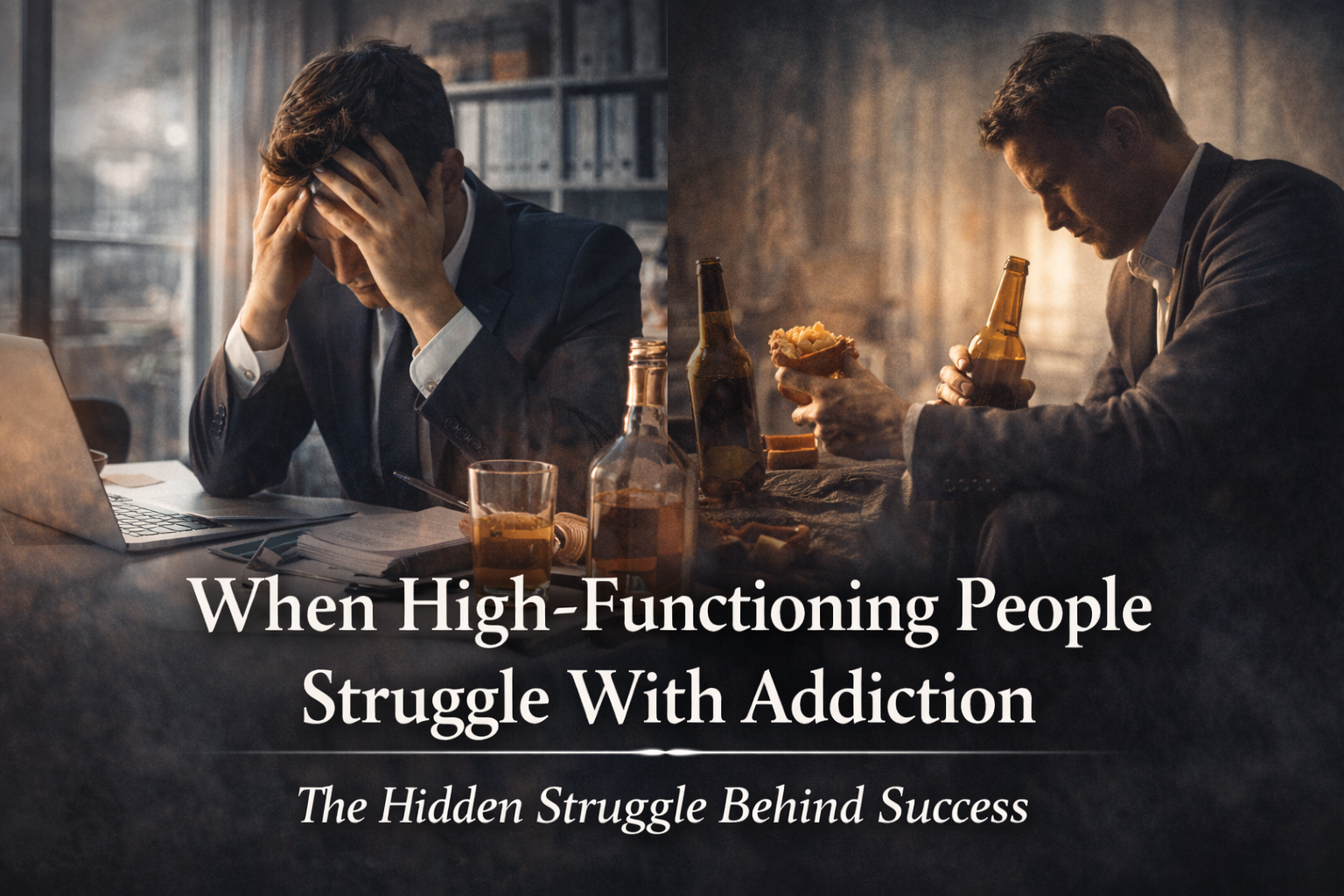
Many people assume addiction only affects individuals whose lives are visibly falling apart.
In reality, a large number of people who struggle with substance use or compulsive behavior continue to work, maintain relationships, and meet responsibilities for years while privately dealing with serious internal conflict.
These individuals are often described as high-functioning, but the term can be misleading.
Functioning on the outside does not mean the person is stable on the inside.
In many cases, the pressure to appear successful makes it harder to ask for help.
Addiction Does Not Always Look Obvious
Some individuals struggling with addiction may:
- maintain a career
- support a family
- hold professional licenses
- manage businesses
- appear calm and controlled in public
Because life still appears to be working, the problem can go unnoticed for a long time.
Internally, however, the person may feel:
- exhausted
- anxious
- emotionally numb
- overwhelmed by responsibility
- unable to relax without using something
Substances or compulsive behaviors can become a way to manage this pressure.
Over time, the behavior may become necessary just to feel normal.
The Role of Stress and Responsibility
High-functioning individuals often carry significant responsibility.
They may be responsible for:
- employees
- clients
- patients
- family members
- financial obligations
- public reputation
Constant pressure without a safe place to talk openly can lead to chronic stress.
When stress builds without relief, people often look for something that provides quick escape or control.
Alcohol, medication, gambling, spending, overeating, or other behaviors can temporarily reduce tension.
The relief works, which makes the pattern repeat.
Eventually, the behavior becomes automatic.
Why Some People Avoid Treatment
Individuals who are successful or highly responsible often hesitate to seek help.
Common concerns include:
- fear of losing professional reputation
- concern about confidentiality
- belief that they should be able to handle it alone
- worry about being judged
- not wanting to appear weak
- distrust of large treatment systems
Because of this, many people delay treatment until the problem becomes more serious.
A private, confidential setting can make it easier to begin addressing the issue earlier.
Insight-Focused Therapy for Lasting Change
For high-functioning individuals, treatment often needs to go beyond simply stopping the behavior.
Important questions may include:
- What pressure am I carrying that I never talk about?
- When did this pattern start?
- What am I trying to avoid feeling?
- Why does this behavior feel necessary?
- What would happen if I stopped?
Insight-driven therapy focuses on understanding the pattern rather than only controlling it.
When the underlying stress, trauma, or emotional conflict becomes clearer, many people find that the urge to use begins to change.
This approach takes honesty and responsibility, but it often leads to more stable and lasting results.
A Private Approach to Treatment
Some individuals prefer treatment in a setting where privacy is respected and therapy is focused on thoughtful conversation rather than quick solutions.
A confidential, individualized approach allows people to speak openly about issues they may not discuss anywhere else.
For individuals who value discretion, stability, and serious work,
For discerning individuals who seek confidential treatment.
Leave a Reply